Featured
Forged in Struggle: Solidary Between the Chicano Movement and the Black Liberation Movement in the 1960s – A Critique Review


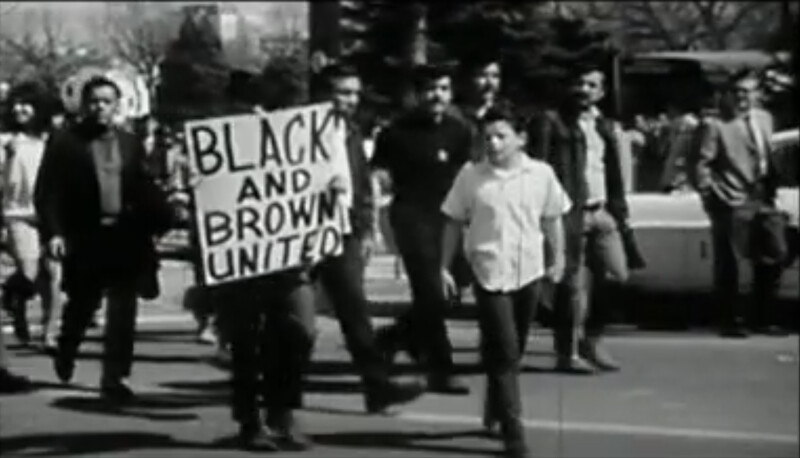
Forged in Struggle: Solidary Between the Chicano Movement and the Black Liberation Movement in the 1960s is a short documentary directed by Sammy García III which focuses on the first portion of an
interview he did with Carlos Montes (co-founder of the Brown Berets, a pro-Chicano paramilitary organization that emerged during the Chicano Movement in the late 1960s), in which Montes recalls the early days of the movement and the closeness between Chicano and Black communities during said time.
There’s a lot to say about this film, the first of which is that it brings a fascinating spotlight to the movement it’s covering. For those who aren’t familiar with the Brown Berets, whether it be because they are not from the United States or they are too young to know what this is all about, the Brown Beters were an organization that fought for the civil rights of Mexican/Latin Americans during the late 60s, a time that was deeply marked by both civil movements and authoritarian government. Much like the Black Panthers, the Brown Berets fought for educational reforms, farmworkers’ rights, and against police brutality and the Vietnam War, and while the movement has faded away long ago, its message
still lives on, especially in these trying times.
So, what makes this documentary so engaging is how relevant it feels for these times. Granted, this is
just the first part of what seems to be a larger project. It only lasts around 8 minutes, so it feels more
like a setup. But even so, in this short length, filmmaker Sammy García III manages to engage the viewer’s attention right away, and it does so by exploring where it all came from. Usually, when people think of this kind of social movement, they focus on what could be called “the most exciting parts”, those focused on the action and change, but, more often than not, we end up forgetting or missing who the people are who created and pushed said movements. We see them as mystical figures that came out of the blue to guide us and fight for us, when actually, a lot of times, they were just regular folks. People who could have been our friends or neighbors, and that just happened to have either the courage or the need to raise their voices and fight.
And that’s exactly what this film does. Before exploring the movement itself, it explains its roots.
Through the interview with Carlos Montes, we get an excellent look at what it was like to be a Chicano
in the late 50s and early 60s, and how Chicano and black people were deeply connected through both
music and social struggles. Both communities faced similar problems when it came to dealing with social injustices and oppression from a clearly pro-white government, and yet at the same time, this situation also made them able to coexist together without a problem. For them, it wasn’t odd to find a Black or Latin teacher or neighbor, as it could happen in a white neighborhood, thus making communities see and appreciate each other, coming as an actual good result of the so-called “American Experiment” in which people from different cultures and backgrounds could find a way to live together.
So, again, it’s a terrific short piece that beautifully illustrates the connection between Chicano and Black communities, and how they came together to fight for their rights in one of the tensest times of American history – and considering what’s going on in the United States right now, it feels even more relevant and needed to watch.
Our only “complaint” might be that… it leaves us wanting more! It’s a very interesting subject, the interview feels close and personal, and García does an excellent job using footage from the times to create an engaging atmosphere… but then it just ends, and we want to know more about this. We hope
there’s a follow-up or even a full feature documentary because it feels like there is a lot more to learn
and talk about this subject and the Brown Berets’ story.