Interview
Inside Queer Khalifa: Director Danial Gondal Discusses Emotional Filmmaking, Sufi Influence & South Asian Cinema


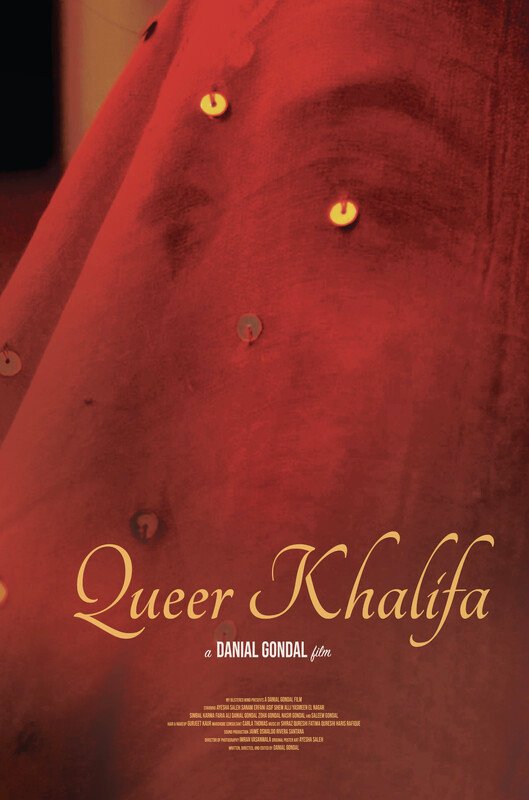
Is there a scene that was particularly difficult to shoot emotionally or technically because of the subject matter?
Danial Gondal: Months had gone into meditating on the simplest, least emotionally invasive approach for filming the beginning scene. It has five camera set ups.
Because of its subject matter, I focused most conversations about the scene on the effects that this moment has on the characters and their motivation throughout the film. I also kept in mind that filming the sexual assault scene might change the atmosphere on set. Knowing that production is more often about managing people than hands-on work with characters, I felt it was important to focus sentiments for the actors playing these characters as separate from the characters themselves. I tried making it clear that the actors were not the characters, making sure to name the character name while blocking and actor names for on-set management. Inayat, Abdullah, Jannat, and Musa were almost conversation topics, more than they were other people impacting the plan of the day. Ayesha, myself, Sanam, and Asif, along with the rest of the crew, Yasmin, Imran, Simbal, Jaime, and Saleem, were all trying to get a job done as amicably as possible.
This effort seemed not to have mattered when filming the scene of concern. The scene was not a technical anomaly compared to the others we filmed that weekend at the house. While both actors were not on screen at the same time, both had to emotionally prepare for it. What I did not understand was that I had to prepare for our collective preparation. Asif was cast a week before filming because another actor had dropped out, so we hadn’t enough time to rehearse a single line with all three of us together. While I did speak with Ayesha at length about the scene, actually doing it was another matter. Both had more questions than I anticipated. I had answers to the first round of questions, maybe even their first round of follow-ups.
Having had people close to me encounter assault, the subject matter was important for me to show, yet hard for me to confront the pain it involved. Ayesha, Asif, and I were in my parents’ basement, for which the previous owner of the house had painted rainbows on the wall for their child. The beginning scene would resemble the end of childhood and being in that atmosphere, I felt a great sense of tragedy. I was at my limit with the film and didn’t know how to express that. It was only through the pestering of the crew to get started that I got an out. This still could have been handled better.
Looking back, I generally should have budgeted time better. I’m not confident that this specific scene should have been brought up in length earlier, because we all did need to have time to understand each other. Filming this scene did change the atmosphere on set. When it was over, it seemed like there were fewer frustrations as we went on to film the last third of the film.

While directing the film, which scene made you feel most proud, and which scene moved you the most emotionally—especially considering that the story centers on a trans man and reflects the journey of a transmasculine experience?
Danial Gondal: Perhaps it’s my bias as a director/actor, but the scenes I was most moved by were the ones I was in. They were all fraught with feelings of ineptitude in accomplishing the job itself well, especially in the translation of my thoughts to the screen. I often felt I wasn’t conveying the psychological experience I meant to express while writing. However, I still find my participation meaningful, as I did attempt to just show how I feel in relation to the material, even if it wasn’t in the way as written. Maybe there is some merit there.
I feel this most strongly with the scene where Inayat apprehends Abdullah on his trans “artifacts”: his scar cream, testosterone packets, and (lack of) pads. I wrote the scene thinking Abdullah would find this opportunity as a teaching moment, but his overwhelming frustration about his violated privacy was to be much more palpable. When we actually filmed, I felt more aware of Abdullah’s ultimate goal: to make this relationship work. He’s a bit annoyed, maybe even non-reactive, but he does snap when it seems he’s expected to have pads. I hope it was communicated that Abdullah was still trying to educate Inayat on how taking testosterone can result in the ceasing of a need for pads, even if he does neglect that such is not always true. I’m glad it turned out the way it did instead of the way it was written. I should consider how impactful a trans metanarrative is, rather than focusing on how a trans person is obsessed with what the signifiers of their identities are in the absence of the person’s short and long term goals.

What conversations or conflicts between the characters do you consider the emotional core of the movie?
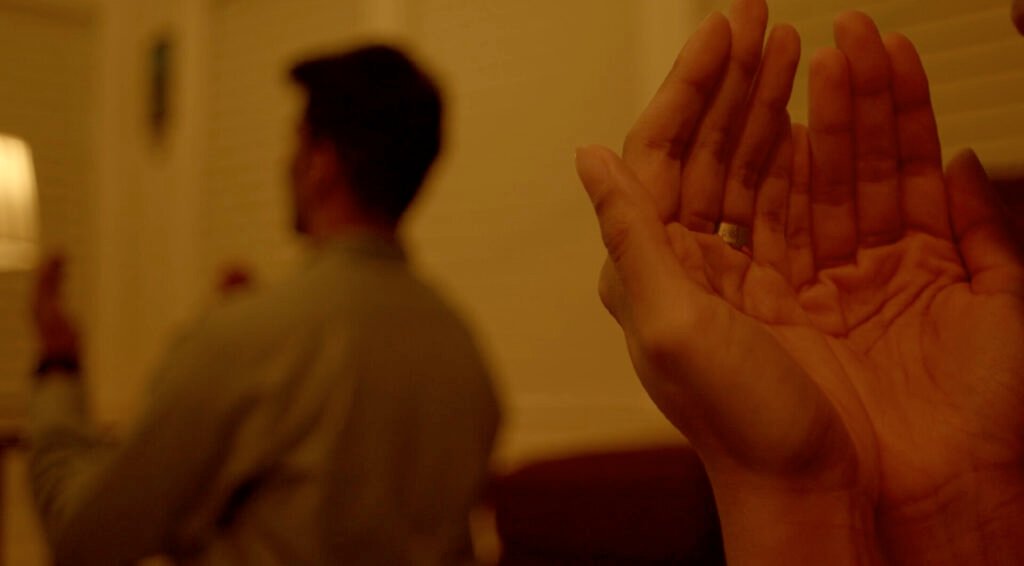
Danial Gondal: The conflict which best defines the short is its midpoint (and the one mentioned earlier). Inayat is trying to demonstrate curiosity about Abdullah’s transition and Abdullah attempts to appreciate that. But that only lasts so long before Inayat’s feelings of abandonment take over, causing Abdullah to mire in his insecurity. Though, as Inayat storms off, Abdullah becomes reminded of his true goal, and that he has failed. Still, Inayat wears the ring Abdullah gave him, even if it is on the hand she has mehndi done for a wedding to someone else. The scene shows the characters’ flaws and story stakes.
How did you approach portraying trans masculinity authentically without falling into stereotypes or misrepresentations?
Danial Gondal: I wanted to focus Abdullah’s character on his conflict with his need to not have to explain himself. That’s a benefit he had from distancing himself from Inayat’s community, but it’s a price he has to pay to go back to Inayat. He does his best to focus on his love for Inayat, not explaining why he went through his transition.
Abdullah is more of a romantic stereotype than any other in that way. His troubles on screen are about proving his worth as a partner despite the conflicts that arise. Of course, these conflicts intersect with his trans identity. But here, it is part of his motivation.
I think others see the stereotype of a transman through a definition of a man and how they measure up to it. Some may say there are no stereotypes of trans men because there is no representation of trans men. This might be true, but there is representation of transphobia in general when one does not live up to definitions of a man. Men are told they must be or “actually be” a woman even if they look like men. There is more to the definition of a woman than the definition of what makes a man, but what’s important about assumptions of trans masculinity is the shadow of how one “must” be a woman.
That past is important to understanding a trans man, though it may only be known when they tell you their story. For me, it’s a circumstance.
But it was important for me to omit Abdullah’s face and cover up his body pre-transition. Abdullah’s voice can be heard, but it’s just the voice of adult Abdullah, with edited frequency to have a higher pitch. Having some semblance of Abdullah pre-transition gives viewers something to work with if they are conducting a comparative analysis of Abdullah’s pre- and current transition. The early POV shot of Abdullah looking at Inayat also influences viewers to see the film through Abdullah’s eyes. Through Abdullah’s gaze, the film becomes defined as a love story quite quickly.
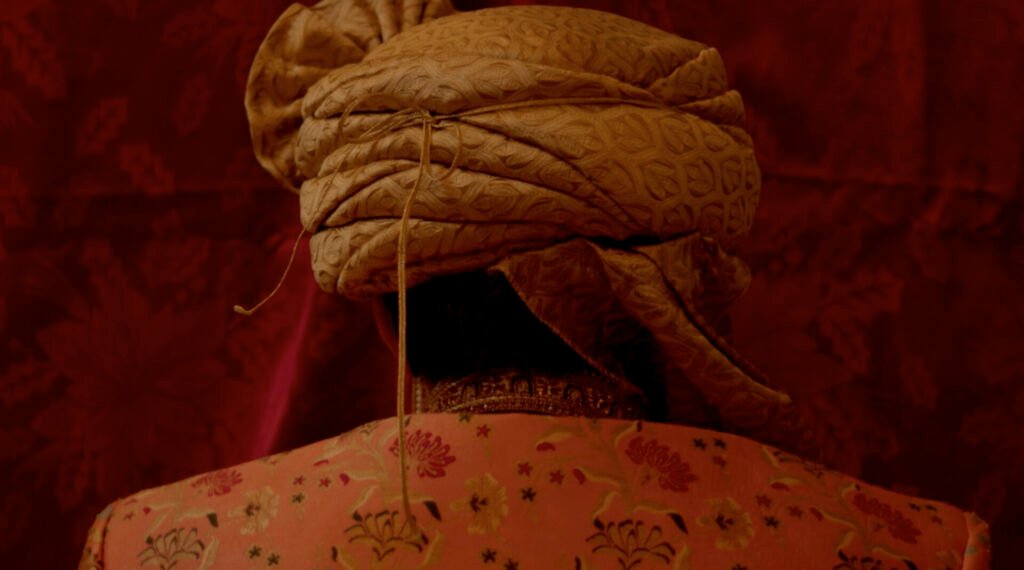
Inayat is her own character and does hold down much of the film. To some, Abdullah may only be relevant when considering him as just part of Inayat’s motivation toward moving away from a forced marriage. If audiences feel for Inayat and what she has to put up with everywhere else in her life, they probably don’t care what Abdullah’s gender identity is if he makes her happy.

Why did you choose Bulleh Shah as a reference point for the narrative? What did he allow you to express that modern language could not?
Danial Gondal: Literary figures have a magical way of bringing and contextualizing the artistic intent of films, in particular. Suspension of disbelief is hard for some viewers, but a sense of a film’s artistic basis lying in a grander form of art, known to humans for centuries, give credibility to the work. If a literary figure is known, it is likely for more than just their novels, poetry, or songs. Their life story must be interesting as well. Bulleh Shah gave me this, even though I learned of his life and work much later into developing the film. Seeing the similarities, I thought of how I must have been influenced by his work through movies and songs already. Perhaps even through my own family, considering Bulleh Shah’s impact on South Asian culture, particularly as a Punjabi.
While literary figures can be used as a device for an audience, they are only a fraction as useful to viewers as they should be to the filmmaker. Bulleh Shah’s work and story gave me a sense of greater purpose beyond what I feared would be perceived as a frivolous love story. Having been labeled as a Punjabi Sufi poet, Bulleh Shah became an apex toward where to direct cultural and religious themes. Unifying references of devotion with historical value within the canon of his work helps build dialogue around the film and its purpose.
Another reason why literary figures are important in films is that viewers likely have tried interpreting and emulating the narratives these figures exude. For characters to do the same thing makes them more relatable. It does risk coming off as kitschy, but viewers, as people, take that risk in some of the most important moments of their life; from professing love, patching up a misunderstanding, or any other speech meant to evoke strong, immediate emotion. Abdullah does this, and goes a step further by changing his name specifically to “Abdullah,” Bulleh Shah’s birth name. The use of referencing is generally seen to help people name a new feeling and make sense of it. This also makes sense of Abdullah and Inayat as they play house in his apartment, practically trialing their relationship. At this point, they haven’t had an adult relationship. It makes more sense to speak through phrases someone else came up with. The intended meaning is understood, even if the delivery requires work.
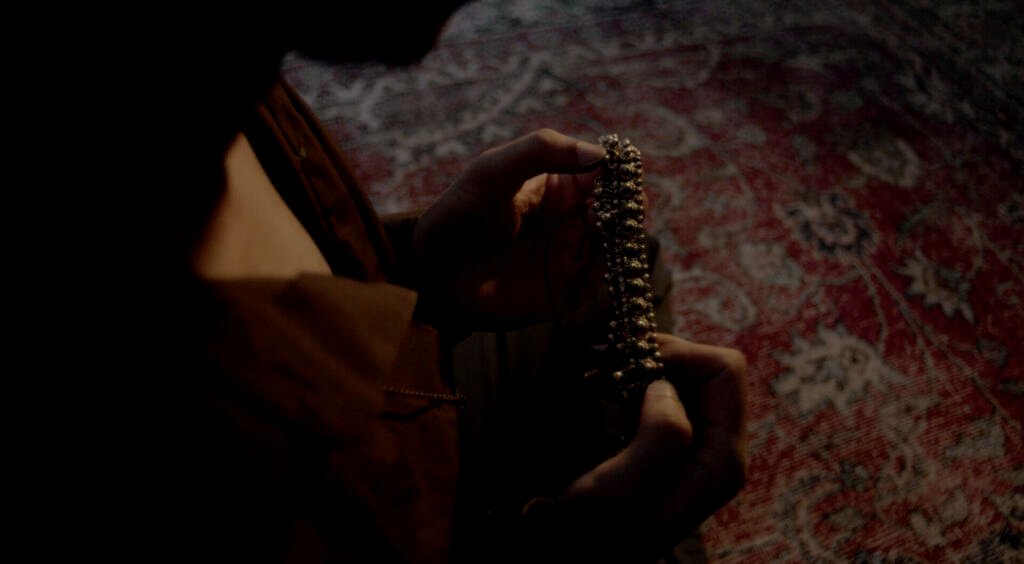
Though I have had some help with translation, the decision to focus on a more somber tone of these sparse verses was my own. My interpretation shown in “Queer Khalifa” should not be taken to represent Bulleh Shah’s full thesis for any singular kafi. However, the ones included do highlight an overwhelming presence of wanting despite neglect and shame, sometimes even felt by the one he claims devotion to. He beckons to Shah Inayat, “come to my door,” and pleads “I have left everything for you.” If viewers didn’t catch these frustrations from the characters from the film, I hope they did through the intertitles. If not, then definitely through the song at the end, “Tu Naiyyo Main Nahi,” sung by Fatima Qureshi and composed by Shiraz Qureshi.
Why do you think Bulleh Shah remains so relevant today, especially in stories about identity and acceptance?
Danial Gondal: Bulleh Shah’s works are not only timeless because of their craft, but their references retain popularity in a culture which has otherwise gone through little change when it comes to social structures and religious foundations. There’s a crowd of musicians, artists, and thinkers who may think that Bulleh Shah speaks on a variety of subjects of that nature, from societal examination to love, and another that thinks he’s only going on about love. Quite a crowd it is; just in modern culture, we have seen musicians like Abida Parveen, A.R. Rahman, Nusrat Fateh Ali Khan, and Hadiqa Kiani performing and recording his kafis or taking inspiration from them.
Readers and listeners who focus on how he questions his place in society and how he isn’t all these things look to “Bulleh Shah, Ki Janna Hai Kon” (translates as “Bulleh Shah, I Know Not Who I Am”). It is practically a thought exercise in where he should belong. Even in the late 1600s, Bulleh Shah lived in the same cultural and religious structures as it closely resembles sentiments felt most strongly in the South Asian subcontinent today. Taken through religious analogies and similar cultural referents, Bulleh Shah’s words still resonate with those from backgrounds where power structure and influence call on society’s participants to accept and mold into. Written like an exercise, it is easy for a reader to engage with the words in a personal manner. By saying, “I do not live in intoxication, I do not live in corruption,” or “I am not Moses, nor the Pharaoh,” Bulleh Shah makes one ask, “who am I if I cannot compare myself to the things of society, of religion?” He did not make Adam or Even, nor did he name himself–who even is the person standing? (Some translations may interpret that last line as “Who is this man standing?” but the Punjabi version does not mention gender at all.)
He stops short of speaking on love. While Bulleh Shah asked listeners of his time to think of who they are without structures, the lack of references to love in human relationships may make one think that is all that he thinks we have. Perhaps, it is love that makes him think that he does not belong in anything that he has come to know of himself or another person. For those who see Bulleh Shah as a forlorn lover, this Kafi is a great example. So lost in his love, he doesn’t recognize himself.
There are more explicit examples where Bulleh Shah ties his societal commentary to religious devotion, then quickly to romantic devotion, which have inspired many songs and films (or both, in the case of “Queer Khalifa”). It may seem like an artistic whim, at worst, a persuasion tactic to call the focus of your affection the proof of mystic energy many people feel.


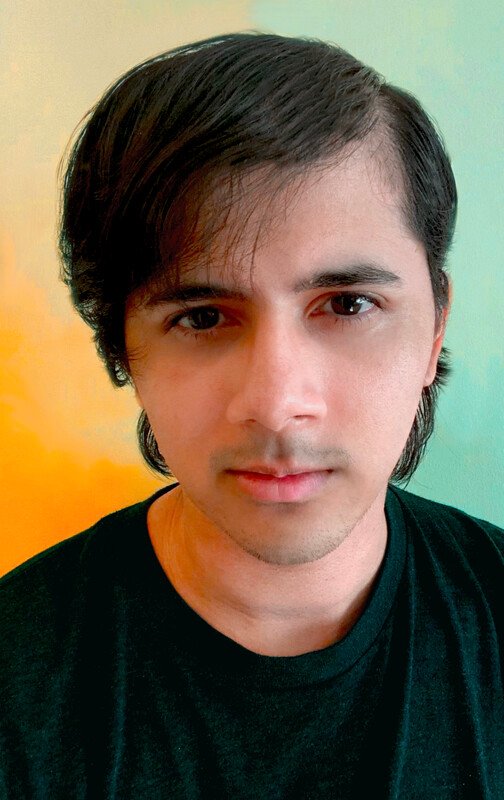
Danial Gondal (he/him) is a first generation Pakistani trans man whose key focus is to tell stories of his heritage through as many cinematic angles as possible. His efforts in screenwriting, directing, editing, and distribution demonstrate a deep interest in furthering not just his own voice, but others’ with adjacent experiences.
His screenplay, “Queer Kafir,” was a second rounder in Austin Film Festival and a semifinalist in The Script Lab and Atlanta Film Festival screenplay competitions. His photography has been exhibited in New Women Space and Leslie Lohman Museum of Gay and Lesbian Art.
Danial’s most recent directing projects include an experimental documentary short film on an Indian American drag queen, “Lal Batti,” and a narrative love story on between a trans man and a hjiabi in “Queer Khalifa.” Having been screened in New York, Bangladesh, India, and Australia, “Queer Khalifa” won awards for its screenwriting and production design in festivals around the world.
As an editor, he has worked with Desi Rainbow Parents to produce promotional videos and help secure a grant of $50,000 for the organization. His current entrepreneurial endeavor is a Pakistani streaming service, Joja Entertainment, to platform new Pakistani voices, which placed as a quarterfinalist in the New Venture Showcase Competition at the University of Southern California.
He holds a BFA in Film & Television from New York University Tisch School of the Arts, an MA in Interdisciplinary Studies from New York University Graduate School of Arts and Science and an MSc in Design, Business & Technology from the University of Southern California Iovine and Young Academy.
Danial Gondal’s Statement
I made “Queer Khalifa” because I wanted to explore a reality where people like me can hope that with a little bit of effort, their love stories can cross the boundaries of cultural pressures. While the film does not reflect my own story, it is specific to my experiences. As such, the representation a queer Muslim life, especially a trans one, does not define the demographics as a whole.
“Queer Khalifa” is meant to inspire compassion for those with backgrounds different from our owns and resilience in our individual journeys.