Featured
What We Wrote Together: A Tender Portrait of Love, Change, and a Generation Finding Itself – Critique Review


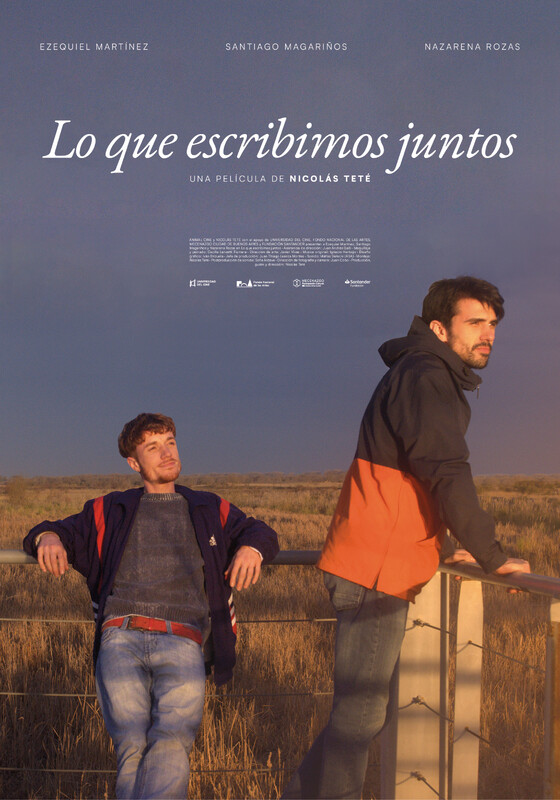
What We Wrote Together is an emotional feature film written and directed by Nicolas Tete, which follows the lives of Mariano and Juan, a gay couple living a quiet life in the countryside following the success of Juan’s novel, as they are visited by Juan’s best friend, Carla, thus leading them to a week of self-reflection about their relationship and lives overall.
There is a lot to say about this film, the main of which is how earnestly it manages to represent an entire generation. While the film revolves around a gay couple, the subjects it explores are universally applicable. What Mariano and Juan are facing after six years of being in a relationship and entering more and more into adult life now that they’re in their early 30s is something that any person of their generation has faced at least once: the struggle to still find themselves even after reaching some level of success. Their relationship is pretty much ideal. They love each other, they make love a lot, and they live peacefully along with their dog, basically in their own world, far away from everything else. It could be thought as an ideal scenario and it pretty much is, yet after Juan’s friend, Carla, arrives with the unexpected news that
she is pregnant and they start talking about life, people they know, and the shocking realization that they’re adults doing serious adult stuff, there comes a bit of a crisis as they begin looking back on who they were, who they are now, and who they might be.

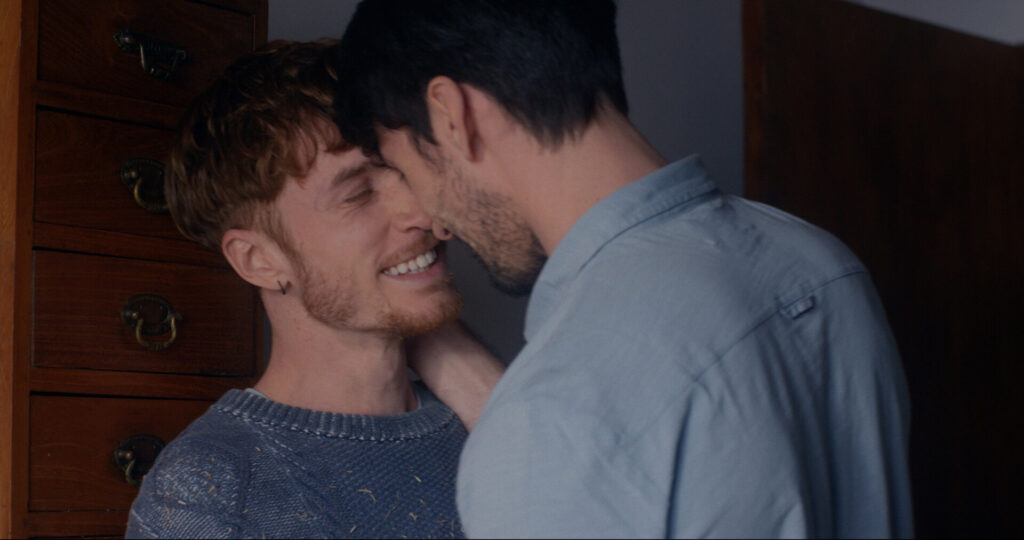
And, again, that’s precisely the beauty of this film. What filmmaker Nicolas Tete is doing here is exploring the self-realization that people change, that all of us change even without wanting, and that because of this, none of our relationships are entirely secure. We might be deeply in love with someone and be happy in our own worlds, but, ultimately, something will change, and this can lead us to some emotional crisis because we are afraid. We are afraid of losing what makes us happy, we are afraid of not being enough, or not living up to what the people we love expect from us. And this is why this film is so representative of its generation. Because people from Mariano, Juan, and Carla’s generation are too self-aware. They come from a generation that has more privileges than the previous ones, more access to
information, and that wasn’t forced to grow up as fast as the ones before. There’s still a childlike or teenage spirit that carries a heavy weight on the way they talk or act, as it can be seen in scenes when the three of them are hanging out and exchanging old stories and concerns about their future (particularly in the case of Carla and her pregnancy). These are not like the adults from the 70s or 80s films. Not even of the 90s or early 2000s. These young adults are still kids at heart. They’re youthful and playful, and yet so deeply conscious about themselves, so aware of the complexities of lives and of their own limitations. It’s such a wonderful contradiction to be so full of energy and playfulness, and yet so easy to fall into depression or anxiety.
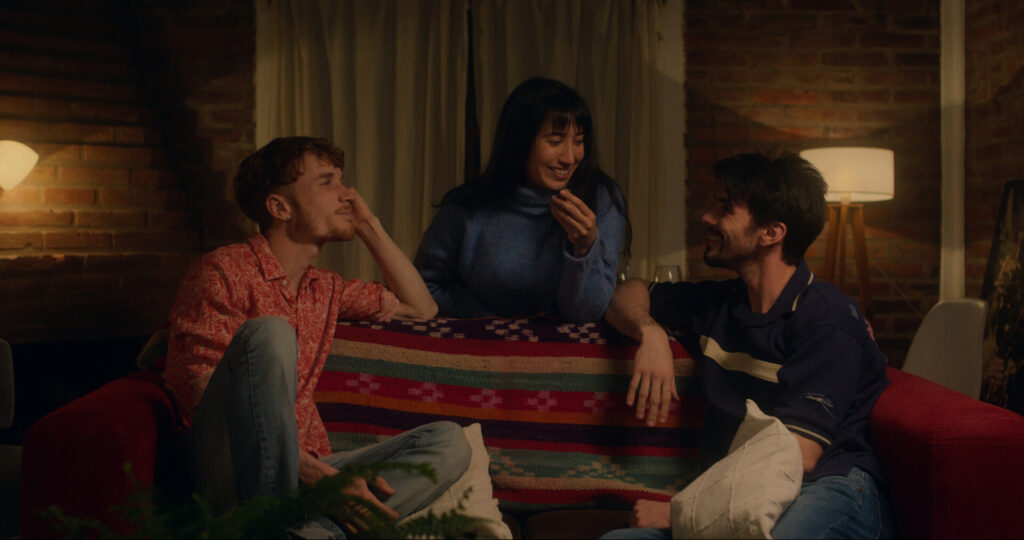
So, it’s a film that manages to capture the voice of a generation through equal parts of charm and drama. No matter our genre or sexual orientation, we can relate to these three players – and what performances they gave! One of the film’s main strengths is how natural it feels at every level. Not only does the script have a realistic style with “casual” dialogue (that tends to encapsulate more than it seems), nor the locations are simple and relatable (though undeniably beautiful), and the acting is quite convincing for its naturalness. Santiago Magariños, who plays Mariano, Ezequiel Martinez, who plays Juan, and Nazarena Rozas, who plays Carla, they all bring the kind of character we all have known. They feel like an actual couple and friends, hence creating a realistic atmosphere that helps the viewer feel more involved.
Then again, none of this would be possible to mention without Nicolas Teté’s confident direction. Teté is no stranger to the filmmaking craft, having directed Last Friday Holidays, Onyx, and A Skeleton in the Closet over the last decade, and his expertise and understanding of cinematic language are clear. After all, one of the most visually interesting elements of the film is its use of space. Having basically only three characters in such a lonely environment isn’t just a narrative decision, but also a visual one. There’s something symbolic about having a happy couple living alone in the middle of nowhere and seeing how close they are when they’re inside the house in the first few scenes, and then how Carla literally gets to be in the middle of them.
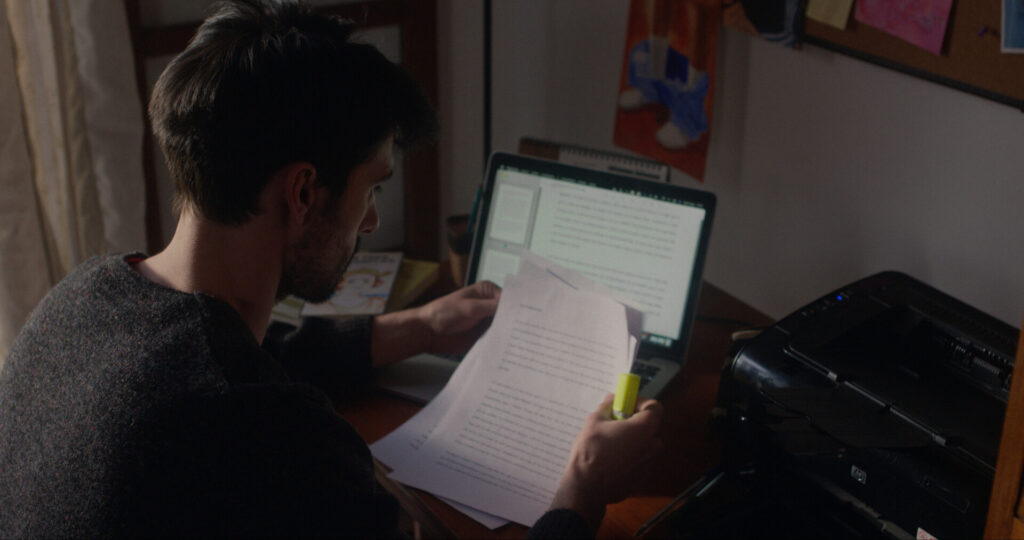
She’s the outside factor that comes to create some chaos – not in a bad way, but just as that element that, even as a friend or family member, gets to affect the peaceful world of our protagonists. So, when she’s around, we see how this atmosphere is forced to interact with the outside world or maybe even reality. When they’re at home, her presence feels like something that is disrupting that lovely environment
from the first scenes. When they’re out in the country, we see how the outside world she represents gets to involve them in other kinds of activities or interests, and when she’s not around, we also get to see how vast the world itself is and how little Mariano and Juan’s world is. All of this helps to strengthen the final idea of the film that, despite everything, despite all the changes, and the world itself, these two
characters have to make sure to face it all together. It’s two against the world… and while we can’t be entirely sure of what the distant future will hold for them, we can embrace the idea of facing it all one day at a time. In conclusion, then, this is a moving film that avoids exaggerated dramas to focus on the day-to-day challenges and concerns of three members of a generation that struggles to find their place. Realistic, funny, sweet, and poignant, this one is a must-watch.
Director Biography – Nicolás Teté

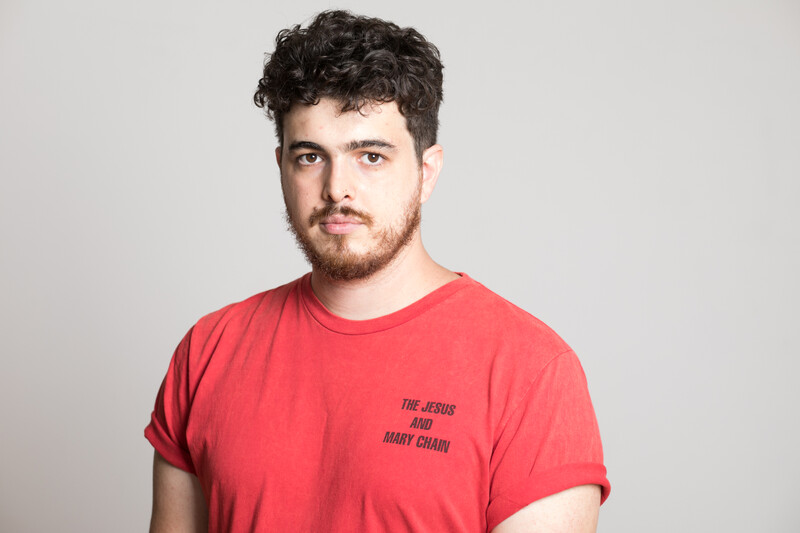
Nicolás Teté was born on November 23, 1989. He’s a film director major (Universidad del Cine-FUC). He is the producer, director and writer of the fiction movies Last Family Holidays (2013), Onyx (2016) and A skeleton in the closet (2021). He co-directed the documentary Shineless (2018). With these films he took part in festivals like BAFICI, Mar del Plata, Guadalajara, Punta del Este, San Diego Latino, San Pablo Latino, among others. He is also a writer and public of the book of short stories Nada nos puede pasar.