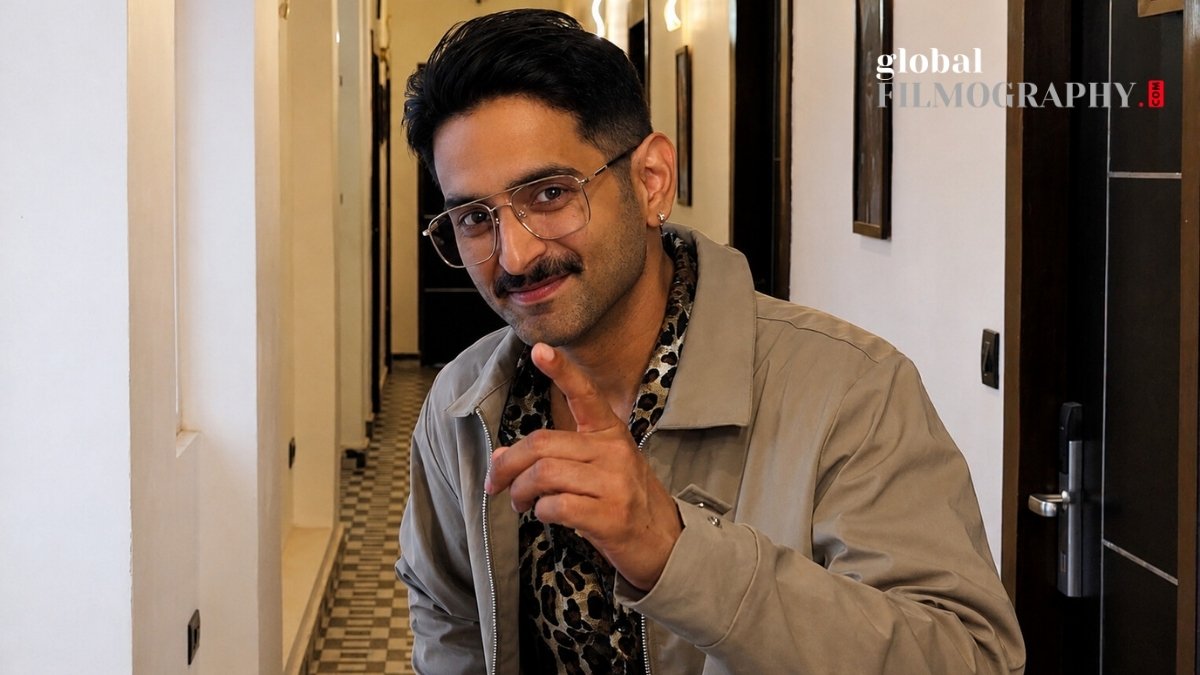
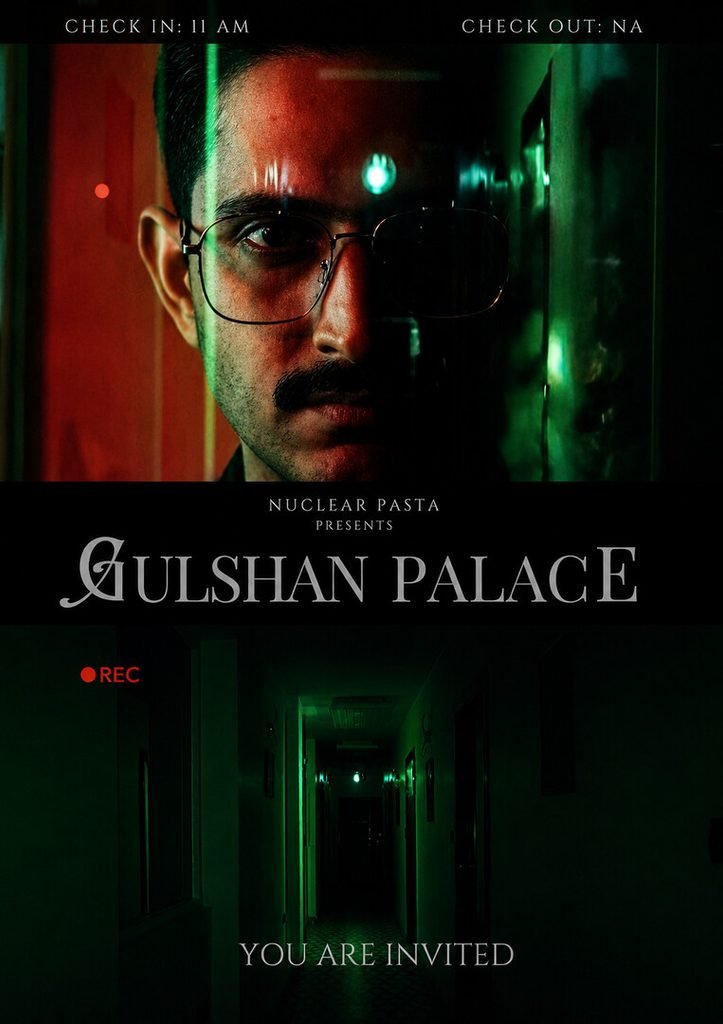
1. Found-footage horror has become one of the most challenging genres to make feel fresh. What drew you to this format, and what made you believe Gulshan Palace could offer audiences something different?
Mudit Nayar: – Honestly, what drew me to the “found-footage” format was the lack of resources. Making a conventional feature film requires a much bigger budget, various equipments and a larger crew. So to bypass all that I had to find a format that worked within my limitations rather than against them.
That said, I also knew found footage is a very crowded space so my focus shifted to making it feel as authentic as possible. I wanted the performances to feel like real people rather than actors delivering lines. I wanted the camera to feel genuinely present, the conversations to feel natural, and the entire experience to have a raw, almost amateur quality that makes the audience question whether they’re watching a film or something that actually happened.
Sometimes limitations force you to be more creative. In many ways Gulshan Palace is a product of limitations.
2. The film gradually transforms an ordinary hotel into a place of psychological terror. How did you approach building suspense through atmosphere rather than relying solely on conventional horror scares?
Mudit Nayar: – I wasn’t really trying to scare the audience in the conventional sense. I never approached Gulshan Palace like a typical horror film or even a thriller. I wanted it to feel like we were simply following a day in the life of a vlogger, where everything appears ordinary at first.
Instead of relying on jump scares, my aim was to make viewers feel slightly uncomfortable without immediately knowing why. I wanted the tension to build almost subconsciously, where little moments start feeling strange and the atmosphere gradually becomes unsettling. It’s a very slow burn. The idea was to let what begins as an ordinary day slowly unravel, eventually leading to a disturbing conclusion.
I think discomfort can stay with you much longer than a sudden scare, and that’s the feeling I wanted the audience to carry with them.

3. Joginder “Jogi” Mutreja is a fascinating antagonist—polite, welcoming, yet deeply unsettling. What was your process for creating a villain whose greatest weapon is his calmness rather than violence?
Mudit Nayar: – I never wanted Jogi to come across as a stereotypical psychopath or an obvious villain. We’ve seen that character many times before. I wanted him to feel like a normal, wealthy small-town businessman with loud taste, but also someone who is genuinely warm, hospitable and proud of his hotel.
He’s the kind of owner who goes out of his way to make every guest feel comfortable. On the surface, there’s nothing particularly threatening about him. But every now and then, he says or does something that’s just slightly off. Not enough to alarm you immediately, but enough to make you question him. Those little moments of awkwardness and social disconnect were far more interesting to me than making him overtly sinister.
For me, Jogi isn’t frightening because he’s loud or violent. He’s frightening because he seems normal and completely comfortable being who he is.
4.The concept of a nightmare being preserved as a ‘legacy’ is one of the film’s most intriguing ideas. Was there a particular real-world observation, experience, or inspiration that led you to explore this theme?
Mudit Nayar: – I wanted the events in the hotel to have a strong foundation. I wasn’t interested in creating a character who was simply mentally unstable or evil for the sake of the story. I felt the horror would be much more compelling if there was a deeper history.
The idea of legacy fascinated me. We usually associate it with something positive that families proudly pass down from one generation to the next. I wondered, what if someone inherited something far darker and still carried it forward with the same love, pride and sense of responsibility?
This question became an integral part of the film.
5. Since the entire story unfolds through a handheld camcorder, every shot has to feel both authentic and cinematic. What were the biggest creative and technical challenges of directing a found-footage film while keeping audiences immersed?
Mudit Nayar: – Most of the challenges weren’t technical as much as they were creative decisions. We were constantly asking ourselves questions: Do we use a higher-quality cinematic camera or embrace a more amateur-looking image? If we keep it raw, will audiences find it authentic or simply think it looks poor? Do we use background music, or rely only on ambience and foley to create tension?
There were practical challenges as well. Since the actors were operating the camera in many scenes, they had to think not only about their performances but also about framing and movement. On top of that, we were making the film with an incredibly small crew as, so every person had to take on multiple responsibilities.
In the end, I felt that if the story and the performances kept the audience engaged, they would accept the imperfections.
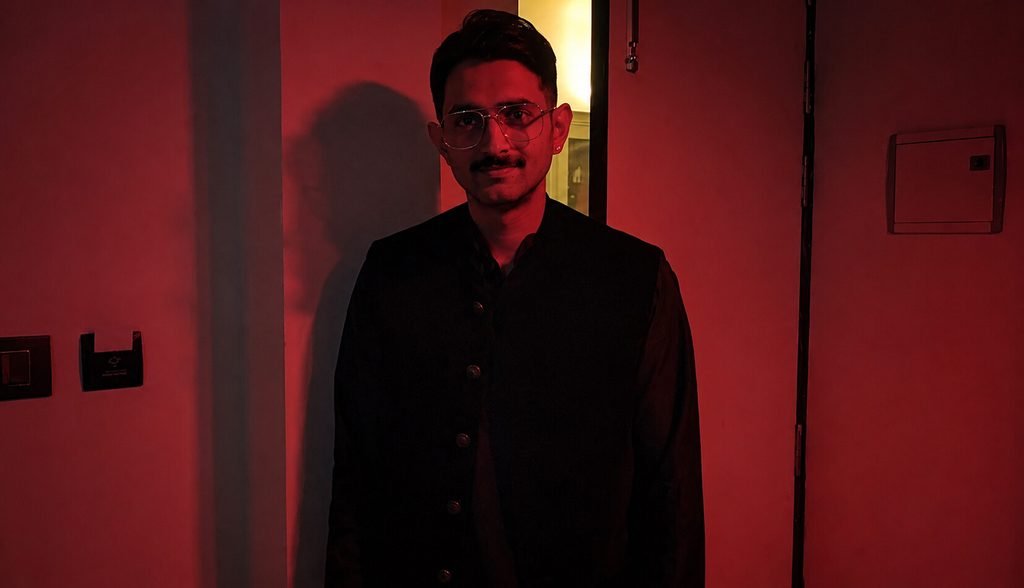
6. You’ve worked extensively in television before stepping behind the camera for feature filmmaking. How has your experience in television influenced your storytelling, directing style, and the way you manage actors on set?
Mudit Nayar: – Television has definitely played an important role in my learning. It’s a demanding format. While you may not always get the opportunity to explore your creativity as deeply as you would like, you do learn an incredible amount. Much of my understanding of shot composition, blocking and the practical aspects of filmmaking came from working in television.
Television production also moves at an incredibly fast pace. Everything happens on very short notice, and I think that experience prepared me well for making Gulshan Palace. We didn’t have the luxury of extensive rehearsals, detailed character development sessions with the actors, or meticulously choreographed scenes. Almost everything was created and executed on the spot, and I was comfortable working in that environment because television had trained me for exactly that.
Apart from that, I am an actor first. Having spent years in front of the camera, I understand how vulnerable acting can feel. I hope that helped me create a comfortable atmosphere for the cast and allowed them to trust the process, especially considering the unconventional way we were making the film.
7. The relationship between Chirag and Mitali provides the emotional grounding before the horror takes over. How did you ensure the audience connected with these characters so that their fear felt personal and believable?
Mudit Nayar: – I simply tried to write Chirag & Mitali as close to real people as possible. I didn’t want their relationship to feel overly romantic or “movie-like.” It was important that they behaved like an ordinary young couple because the entire found footage format depends on authenticity. If the audience doesn’t believe the people, they won’t believe the horror.
Interestingly, while shooting, especially around the fourth day, I realised that Chirag was turning into an incredibly warm, lovable character. He had this innocence that naturally made you root for him and hope nothing bad happened to him. At the same time, I also began to understand Mitali’s world much more deeply and appreciate the emotional strength she brought to the story.
A lot of the credit for that goes to Yatharth and Shreya. They brought those characters to life in ways that went beyond what I had written on the page. Once that emotional connection was established, the horror became much more personal because the audience wasn’t just watching two characters in danger, they were watching two people they genuinely cared about.
8. Many horror films rely on supernatural explanations, but Gulshan Palace seems to suggest that human systems and inherited evil can be even more terrifying. What message or reflection do you hope audiences take away after the credits roll?
Mudit Nayar: – I think one of the biggest fear is the idea that ordinary people can become part of something terrible without even questioning it. History is full of examples where evil survived because people accepted it as normal.
I don’t expect audiences to leave with a lesson. I just hope they leave asking themselves which parts of the film felt fictional and which parts didn’t. Maybe the monsters we should fear don’t live in abandoned buildings. Maybe they live in ordinary people and ordinary decisions.
9.Looking ahead, what kind of stories excite you as a filmmaker? Do you see yourself continuing to explore horror and psychological thrillers, or are there other genres you’re eager to challenge yourself with?
Mudit Nayar: – All kinds of stories excite me. However , psychological horror is something I naturally gravitate towards because I find it fascinating. I enjoy stories that don’t underestimate the audience. I like intelligent films that trust people to connect the dots on their own instead of explaining everything.
I have a few scripts and ideas that I’m very excited about. Whether they get made or not is another question, but I’m constantly writing. I really enjoy writing. Starting with a blank page and slowly discovering the characters, their conversations and their world. I love writing dialogue that feels like something you could overhear in real life rather than something written to sound cinematic.
So I don’t see myself sticking to one genre. I just hope I get to tell stories that feel honest and original.
About Mudit Nayar:

Mudit Nayyar is an Indian television actor. Mudit made his television début with Palampur Express as Tanmay Bose. Then he played the role of Keshav in Teri Meri Love Stories. Then he bagged the lead role of Jeet in popular horror television serial Anamika opposite Simran Kaur, Annie Gill, and Shivani Surve which was his first major break. He was nominated at the ITA Awards that year for the same. His next project was Badi Devrani in which he portrayed the character of Vibhor Poddar. He next went on to play the role of Vardhan in Devanshi. Then in 2019 he played the role of Yogi in Sony TV ‘s Ishaaron Ishaaron Mein. For his performance he won ITA Award for Best Actor (Jury). He won the Lions Gold Best Actor Award for the same.After more than 3 years he came back with a serial and played the role of Vikrant deshmukh aka Sarkar . In 2024 he begged the role of Vicky in Kavya .

Recommended for you