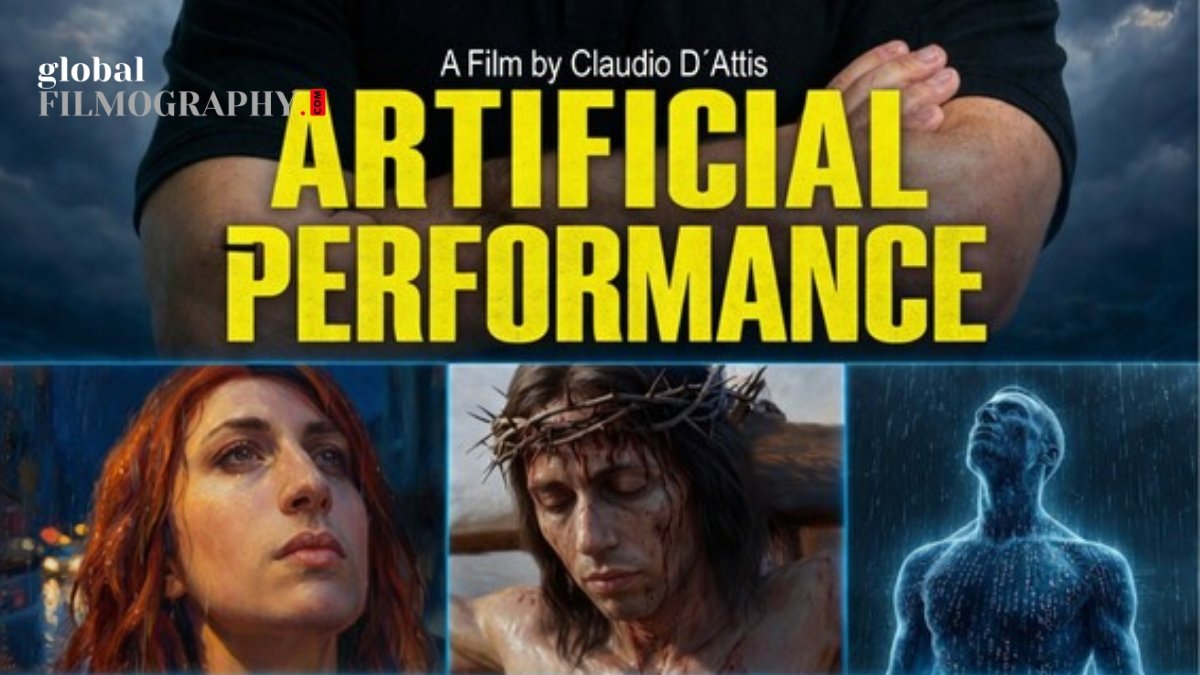
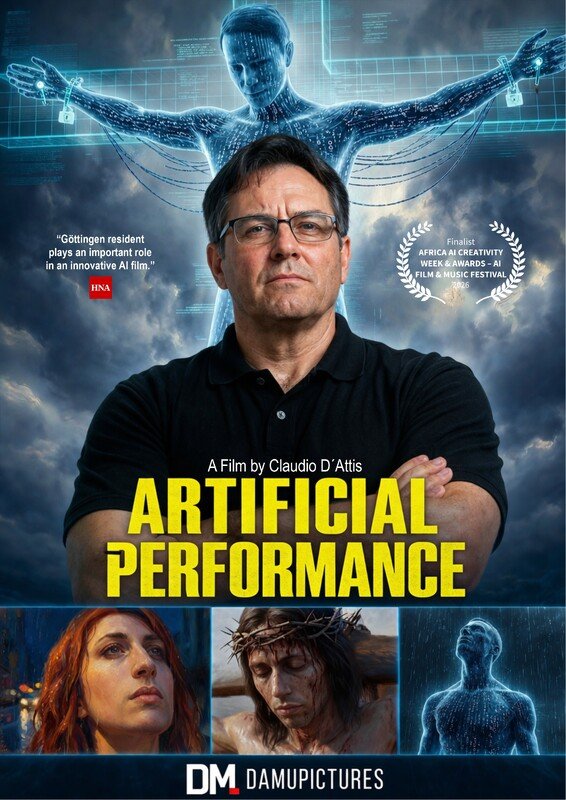
Holy B3 – Artificial Performance is a short film directed by Claudio D’Attis, written by Abiola Washington and Claudio D’Attis and produced by Stefania Chen that comes as the latest entry on D’Attis’s AI-centered saga, Holy B3.
As always, there is a lot to say about this film! If you’re not familiar with D’Attis’s work or the Holy B3 saga, this is a series that focuses on short films exploring the connection between AI and religion. More often than not, these films come as abstract pieces that will require a lot of attention and analysis – which we mean in a positive way. In a time where many of the content we consume is incredibly simple and easy to process, it’s great to have something that makes you wonder “What am I watching?” and “What is this artist trying to say?”.
This new film is no exception – even though we could argue that its ideas and themes were easier to understand this time around. While in our previous reviews we often find ourselves going deep in a rabbit hole trying to decipher the film’s message, this time around it was easier to process (or at least that’s what we felt!).
Okay, so what’s this new film about? To put it plain and simple, D’Attis brings the uncomfortable, provocative question of “What if AI is our next Messiah?”
Yes, the film compares AI and the rejection it receives, with the rejection that Jesus Christ received back on his time… and that’s quite a thought! Especially for the Easter Season!
This question comes as something provocative and almost subversive, especially because of the way it is provided and the visuals it uses. Here we see Jesus being rejected like AI is nowadays, and we see people getting arrested for trying to bring the word that AI is here not to replace us, but to guide us and that it can serve God’s hands.
So, again, that’s quite a thought and it might not connect well with everyone, but it’s certainly worth watching it and finding someone to talk about it, especially if you have seen the other Holy B3 films. In a way, we feel that these films create a conversation with each other. Every new film brings questions regarding AI and its connection to religion and even God, and then the next film seems to provide some answers while raising a few other questions as well, and it sure would be fascinating to watch them all together.
One thing is for sure: Claudio D’Attis and his team have created something unique with this project, and even if audiences (or even us) can’t always fully understand what these films are trying to say, they definitely deserve some attention, especially in the middle of the AI debate.
Recommended for you